




Sarah needed to order new flooring for her living room, and a quick estimate of its square footage seemed simple enough. She measured the length and width, multiplied them, and placed her order. The result? She was short by nearly 20 square feet, delaying her project and costing her an extra rush delivery fee. This common scenario highlights why understanding how do you measure square feet with precision is non-negotiable for any home project or property assessment.
Last updated: July 20, 2026
- Accurate square foot measurement directly impacts material costs, project timelines, and property valuations.
- The basic formula (Length × Width) applies to simple rectangular spaces, but most rooms require breaking them into smaller, manageable sections.
- Modern tools like laser measurers offer superior precision and speed compared to traditional tape measures.
- Always factor in waste (typically 10-15%) when ordering materials like flooring or paint.
- Discrepancies in official square footage can arise from varying measurement standards, especially in real estate.
How do you measure square feet: Why Accurate Square Footage Matters in 2026
In July 2026, accurate square footage is more critical than ever, influencing everything from the cost of a renovation to the market value of a home. Incorrect measurements can lead to significant financial setbacks. For instance, over-ordering materials wastes money, while under-ordering causes delays and potential price increases for supplementary purchases.
Beyond DIY projects, property assessments and real estate transactions heavily rely on precise square footage. According to the National Association of Realtors (NAR) 2025 guidelines, discrepancies in listed square footage are a leading cause of buyer disputes. A difference of just 50 square feet in a moderately priced home could mean thousands of dollars in perceived value.
Essential Tools for Measuring Square Feet
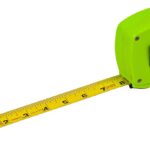
Choosing the right tools is the first step toward accurate square footage measurement. While a standard tape measure is fundamental, modern technology offers significant advantages, especially for larger or more complex spaces.
Laser distance meters have become increasingly popular as of 2026. These devices use a laser beam to measure distances with remarkable precision, often within a fraction of an inch, and can calculate area and volume directly. They are particularly useful for measuring house square footage, reaching high ceilings or across wide rooms without assistance.
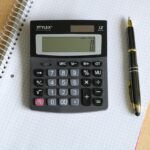
For drawing layouts, a notepad, pen, and a basic calculator are indispensable. Some advanced laser measurers even integrate with smartphone apps, allowing you to sketch floor plans directly and automatically calculate square feet as you measure. This streamlines the process and reduces manual error.
How to Calculate Square Footage: Step-by-Step
Calculating square footage involves a straightforward process, but precision is paramount. Here’s a methodical approach to ensure accuracy:
- Clear the Space: Remove any obstacles that might impede your measurements. Furniture, rugs, or decorative items can lead to inaccurate readings.
- Measure Length and Width: For a simple rectangular room, measure the length of one wall and the width of an adjacent wall. Always measure from wall to wall. Take multiple measurements at different points along each wall to account for slight irregularities, and use the largest value.
- Multiply for Area: Once you have the length and width in feet, multiply them together. The result is the square footage (Length × Width = Square Feet). For example, a room 12 feet long by 10 feet wide is 120 square feet.
- Address Irregular Shapes: Most rooms aren’t perfect rectangles. Break down complex or L-shaped rooms into simpler rectangular or square sections. Measure each section individually, calculate its square footage, and then add all the section totals together to get the total area. For instance, an L-shaped room can be divided into two rectangles, A and B. Calculate Area A + Area B.
- Account for Obstructions: Subtract the square footage of any non-floor areas within your space, such as large built-in cabinets or permanent fixtures that won’t be covered by flooring. However, standard doorways and small alcoves typically remain part of the total.
- Measure Multiple Rooms: If you’re calculating the square footage for an entire floor or home, repeat this process for each room, hallway, and closet. Sum all these individual areas to get the total finished living area.
Measuring Irregular and Complex Spaces
The real challenge in square foot measurement often lies in rooms that aren’t perfectly square or rectangular. Think about bay windows, circular areas, or rooms with angled walls. For these, a bit more geometric thinking is required.
For rooms with bay windows, treat the bay as a separate geometric shape—often a rectangle or trapezoid—and add its area to the main room’s rectangular area. If you encounter a circular section, like a turret, use the formula πr² (pi times the radius squared). For triangles, it’s 0.5 × base × height.
What about angled walls? Extend imaginary lines to form a rectangle, measure that larger rectangle, and then subtract the areas of the small triangles you’ve added virtually. This method, while requiring careful visualization, helps maintain accuracy when you calculate area.
Common Mistakes to Avoid When Calculating Square Feet
Even seasoned DIYers can fall prey to subtle errors when trying to find square footage. Avoiding these pitfalls is crucial for precise material estimation and property assessment.
Pros of Accurate Measurement
- Cost Savings: Prevents over-ordering expensive materials like flooring or paint.
- Time Efficiency: Avoids delays caused by insufficient material quantities.
- Accurate Valuation: Ensures fair property pricing and tax assessments.
- Project Planning: Provides a reliable foundation for all renovation plans.
- Legal Protection: Reduces disputes in real estate transactions.
Cons of Inaccurate Measurement
- Financial Loss: Wasted material or additional costs for rush orders.
- Project Delays: Waiting for more materials extends timelines.
- Misleading Valuations: Can lead to overpaying or under-selling property.
- Incorrect Material Needs: Projects may fail due to insufficient supplies.
- Disputes: Potential legal issues in property sales or contractor agreements.
One prevalent mistake is rounding measurements prematurely. Always measure to the nearest inch or quarter-inch, converting to decimals of a foot only at the final calculation stage. Rounding too early can introduce cumulative errors, especially in larger spaces. Another common oversight is neglecting to account for the thickness of walls or the presence of non-livable spaces when measuring house square footage for real estate purposes.
A professional standard, like those used by the American National Standards Institute (ANSI) for measuring residential properties, dictates what counts as finished square footage. This typically excludes garages, unfinished basements, and areas with ceiling heights under 7 feet, though local building codes may vary. For more on specific building standards, consult How to Precisely Measure Square Feet in 2026: An Expert Guide.
Expert Tips for Precise Square Foot Measurement
Achieving truly precise square foot measurement goes beyond basic arithmetic. Here are some insights professionals use:
- Measure Twice, Cut Once (or Order Once): This old adage holds true. Always take at least two sets of measurements for each dimension, ideally from different points, and use the average or the larger number if ordering materials.
- Sketch a Floor Plan: Before you even start measuring, draw a rough sketch of the room or area. This helps you visualize how to break down complex shapes and where to take each measurement. Label each dimension clearly on your sketch.
- Understand Material Waste: When ordering materials like flooring, tile, or carpet, always add a buffer for waste. A standard recommendation is to add 10% to 15% to your calculated square footage. This accounts for cuts, errors, and future repairs. For example, if you need 100 square feet of tile, order 110-115 square feet.
- Document Everything: Keep a detailed record of your measurements, calculations, and the date. This documentation can be invaluable for future reference, comparing quotes, or resolving potential disputes.
- Calibrate Your Tools: Even new tape measures can be slightly off. Periodically check your measuring tools against a known standard length to ensure they are accurate.
- Consider Professional Assistance: For high-stakes situations, such as property appraisals or significant renovations, consider hiring a professional appraiser or surveyor. They use advanced equipment and adhere to strict standards, providing verifiable square footage. This is particularly important for property value assessments.
Comparison: Measuring Tools for Square Footage
The choice of measuring tool can significantly impact the accuracy and efficiency of your square footage calculations. Below is a comparison of common options available as of July 2026:
| Feature | Tape Measure | Laser Distance Meter | Measuring App (Smartphone/Tablet) |
|---|---|---|---|
| Accuracy | Good (user-dependent) | Excellent (typically ±1/16 inch) | Variable (depends on app & device sensors) |
| Ease of Use | Requires two hands for long distances | One-handed operation, quick readings | Convenient, but can be finicky |
| Speed | Slower for large spaces | Very fast, instant calculations | Moderate, requires scanning/walking |
| Cost (as of 2026) | Low ($10-$30) | Moderate ($30-$200) | Low to Moderate (free to $20/month subscription) |
| Best For | Small rooms, short distances, detailed work | Large rooms, irregular shapes, professional use | Quick estimates, planning, basic layouts |
| Drawbacks | Can sag, needs steady hands, requires helpers for long runs | Can be affected by bright sunlight, reflective surfaces | Relies on camera and accelerometers, less precise than dedicated hardware |
How to Verify Professional Square Footage Measurements
When you’re dealing with a contractor’s quote or a home appraisal, how do you measure square feet to verify the figures? Professionals should be able to provide detailed floor plans with all dimensions and calculations. Don’t hesitate to ask for this documentation.
Compare their measurements against your own, focusing on key areas. In my years reviewing property documents, I’ve seen that discrepancies often arise from how finished versus unfinished spaces are categorized, or how shared walls in multi-unit dwellings are treated. Understanding the standards they use, such as ANSI Z765 for residential properties in the US, is crucial. If a significant difference exists, ask for a re-measurement or a clear explanation of their methodology. This due diligence can save you from overpaying for materials or a property.
Frequently Asked Questions
What is the basic formula to calculate square feet?
The basic formula for calculating square feet is Length multiplied by Width (L x W = SF). This applies to any rectangular or square space. Ensure both measurements are in feet before performing the multiplication to get an accurate square footage.
Do I need to add extra for material waste when ordering?
Yes, it’s highly recommended to add extra for material waste. For most flooring, tile, and paint projects, adding an additional 10% to 15% to your calculated square footage is a common industry practice to account for cuts, irregular shapes, and potential errors during installation.
How do you measure square footage for an L-shaped room?
To measure an L-shaped room, divide it into two or more simpler rectangular sections. Measure the length and width of each individual rectangle, calculate their respective square footages, and then add these individual areas together to get the total square footage of the L-shaped room.
What’s the difference between linear feet and square feet?
Linear feet measure a one-dimensional length, such as the length of a wall or a piece of trim. Square feet, on the other hand, measure a two-dimensional area, representing the total surface coverage of a floor or wall. You typically buy trim by the linear foot and flooring by the square foot.
Are unfinished basements included in a home’s square footage for real estate?
Generally, unfinished basements are not included in a home’s official finished square footage for real estate listings or appraisals. Standards typically require areas to be heated, finished, and have a minimum ceiling height (often 7 feet) to be counted as finished living space. Always check local building codes and appraisal standards.
Can I use a smartphone app to measure square feet?
Yes, many smartphone apps can measure square feet using your device’s camera and sensors. While convenient for quick estimates and basic planning, they may not offer the same level of precision as a dedicated laser distance meter or a traditional tape measure for critical projects. Always double-check with a physical tool.
Understanding how do you measure square feet accurately is a fundamental skill for homeowners and professionals alike. By employing the right tools, following a methodical process, and proactively avoiding common mistakes, you ensure your projects are on budget and your property assessments are fair. Precision in measurement ultimately translates to confidence in your planning and execution.
Information current as of July 2026; pricing and product details may change. For readers asking “How do you measure square feet”, the answer comes down to the specific factors covered above.
Related read: Cubic Yard Calculator: Master Material Estimation for Any Project.