






Why do raises rarely make people feel richer? Because spending expands to absorb income within 60-90 days — long before savings adjust. Similarly, many Austin residents and visitors take the city’s spectacular natural light shows for granted, letting perfect viewing opportunities slip by. The honest answer to experiencing a truly unforgettable Austin sunset is careful planning, understanding local nuances, and knowing exactly where and when to look.
Last updated: August 3, 2026
- Austin sunsets are renowned for their vibrant colors and dynamic backdrops, enhanced by the city’s unique topography and atmospheric conditions.
- Optimal viewing involves understanding daily sunset times, golden hour, and blue hour, which vary significantly by season.
- Top viewing spots like Mount Bonnell, Lake Travis, and the Congress Avenue Bridge offer distinct experiences, from panoramic vistas to bat emergences.
- Successful sunset chasing requires checking weather forecasts, planning for crowds, and arriving well before the actual sunset for the best light.
- Capturing stunning photographs means considering composition, timing your shots during golden or blue hour, and being prepared with the right gear.
The Magic of Austin Sunsets: Why They Stand Out
Austin’s sunsets are not just beautiful; they are a unique blend of natural phenomena and urban landscape that creates truly memorable spectacles. The city sits on the edge of the Texas Hill Country, offering a varied topography of rolling hills, limestone cliffs, and meandering waterways like Lady Bird Lake and Lake Travis.
This geographical diversity means diverse vantage points. From high overlooks, you can witness the sun dipping behind distant hills. Along the lakes, you’ll see stunning reflections that double the visual impact. The expansive Texas sky, often clear or dotted with just the right amount of cloud, provides a vast canvas for brilliant oranges, purples, and deep reds.
A unique insight specific to Austin is the interplay of its urban glow with the natural twilight. As the sun sets, the city lights begin to twinkle, creating a compelling contrast that’s particularly striking during the ‘blue hour’ — the period of deep twilight when the sun has set but indirect sunlight still paints the sky.
Timing is Everything: Decoding Austin’s Sunset Schedule
To truly appreciate an Austin sunset, precision in timing is crucial. The exact moment the sun dips below the horizon changes daily and significantly throughout the year. For instance, as of August 2026, Austin’s sunsets occur between approximately 8:00 PM and 8:30 PM, gradually shifting earlier as autumn approaches.
Beyond the actual sunset time, understanding ‘golden hour’ and ‘blue hour’ enhances the experience. Golden hour, the period shortly after sunrise or before sunset, bathes everything in a soft, warm light perfect for photography. Blue hour follows sunset, offering deep, rich blue tones as city lights become more prominent. According to sunrise-sunset.org, accurate daily times for Austin are readily available, making planning straightforward.
Seasonal shifts dramatically affect the light and duration. Summer brings later sunsets and often more haze, while winter offers earlier, crisper sunsets with potentially more vivid colors due to clearer air. The shortest day in Austin, TX, typically occurs around the winter solstice in December, while the longest is around the summer solstice in June, according to historical data from dateandtime.info.
Top Spots for an Unforgettable Austin Sunset Experience
Austin boasts numerous locations where you can witness breathtaking sunsets, each offering a distinct ambiance and view. Choosing the right spot depends on the experience you’re seeking.
Mount Bonnell: Iconic Panoramic Views
Mount Bonnell is perhaps the most famous spot to watch the Austin sunset. Perched 775 feet above Lake Austin, it offers unparalleled panoramic views of the city skyline, the lake, and the surrounding Hill Country. It’s easily accessible via a short climb up a set of stone stairs, making it popular for both locals and tourists.
The view from Mount Bonnell is best described as sweeping, allowing you to see for miles. Parking can be challenging on weekends and holidays, so arrive early. While it’s a romantic spot, families also frequent it for picnics and enjoying the vista.
Lake Travis: Oasis Texas Brewing Co.
For a more relaxed and amenity-rich sunset experience, head to Lake Travis, particularly the Oasis Texas Brewing Company. This sprawling venue offers multiple decks and restaurants with westward-facing views directly over the expansive lake. The setting sun often paints the water in fiery hues, creating a dramatic backdrop for dinner or drinks.
The Oasis experience is best for those who want a complete evening out. It can get very busy, especially on weekends, so reservations or arriving well in advance of sunset are advisable. The atmosphere is lively, with live music often accompanying the sunset view.
Lady Bird Lake: Ann and Roy Butler Hike-and-Bike Trail
For an urban sunset experience, the Ann and Roy Butler Hike-and-Bike Trail around Lady Bird Lake provides stunning reflections off the water, with the downtown Austin skyline as a backdrop. This spot is ideal for those who enjoy combining exercise with scenic beauty.
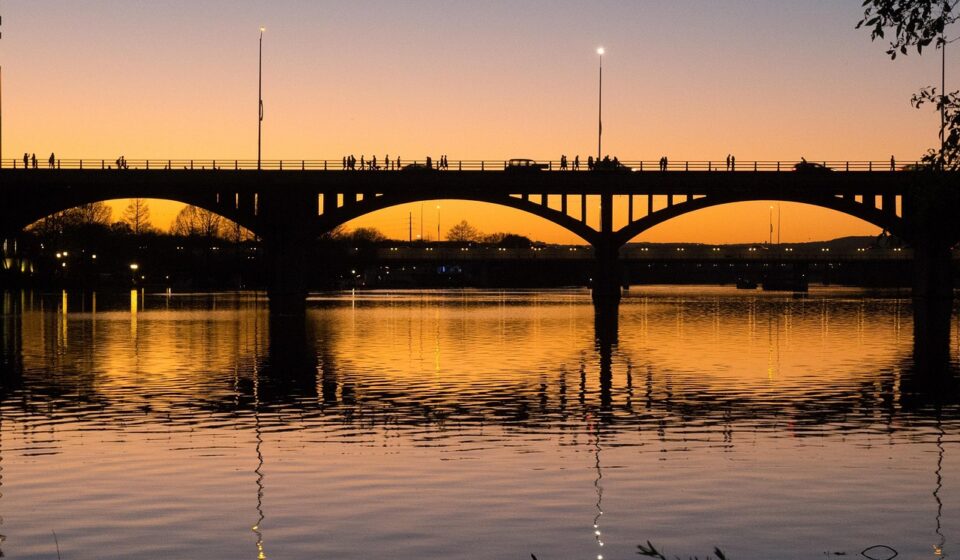
Various points along the 10-mile loop offer excellent views, particularly near the Congress Avenue Bridge or the pedestrian bridge near Lamar Boulevard. It’s less about a single viewpoint and more about the dynamic interplay of light, water, and architecture. This area is generally accessible and offers parking at various trailheads.
South Congress Bat Bridge: Congress Avenue Bridge
The Congress Avenue Bridge offers a truly unique Austin sunset experience: the emergence of North America’s largest urban bat colony. As the sun sets, millions of Mexican free-tailed bats take flight, creating a swirling spectacle against the colorful sky. According to Bat Conservation International, this colony is a significant ecological feature.
Viewing is best from the top of the bridge, along the walking paths, or from boats on Lady Bird Lake. It combines natural wonder with the aesthetic appeal of the sunset. This spot is immensely popular, so expect crowds, especially from March to October when the bats are most active.
Zilker Park: Relaxed, Open-Space Viewing
Zilker Metropolitan Park, Austin’s most famous green space, offers a more casual and sprawling setting for sunset watching. While not as elevated as Mount Bonnell, the open fields and gentle slopes provide unobstructed views of the western sky, often with the downtown skyline silhouetted.
It’s an excellent choice for families, picnics, or simply relaxing on a blanket. Parking is ample, though it can fill up during major events or busy weekends. The park’s relaxed vibe makes it a great option for a spontaneous sunset outing.
Planning Your Perfect Austin Sunset Outing
A little preparation goes a long way in transforming a good sunset view into an unforgettable experience. Don’t leave it to chance.
Checking Forecasts: Cloud Cover and Air Quality
The best sunsets often feature some clouds, but not too many. Scattered clouds can catch and reflect light, enhancing colors. Heavy cloud cover, however, can obscure the sun entirely. Check the local weather forecast from sources like the National Weather Service a few hours before you head out. Additionally, air quality can influence clarity and color intensity; clearer air typically means sharper, more defined hues.
Arrival Times: Golden Hour vs. Actual Sunset
Aim to arrive at your chosen spot at least 30-45 minutes before the official sunset time. Austin sunset allows you to secure a good viewing position, set up any photography equipment, and most importantly, experience the magical golden hour. This pre-sunset period offers incredibly soft, warm light that transforms the landscape and is ideal for capturing atmospheric shots. Missing this window means missing some of the best light.
Crowd Management: Weekdays vs. Weekends
Popular spots like Mount Bonnell and the Congress Avenue Bridge can draw significant crowds, especially on weekend evenings. If you prefer a more serene experience, consider visiting on a weekday or exploring slightly less-known areas. For those embracing the lively atmosphere, arrive even earlier to find parking and a comfortable spot. For tips on navigating Austin’s bustling attractions.
Packing Essentials: Water, Bug Spray, Camera Gear
Evenings in Austin can still be warm, particularly in summer, so bring water. Mosquitoes can be prevalent near lakes and green spaces, so bug spray is a wise addition. If you plan to photograph, ensure your camera, extra batteries, and possibly a tripod are ready. A small blanket or chair can also enhance comfort at spots like Zilker Park.
Capturing the Glow: Photography Tips for Austin Sunsets
Austin sunsets are a photographer’s dream. With a few simple tips, you can capture stunning images, whether you’re using a smartphone or a professional camera.
Gear: Phone vs. DSLR
Modern smartphones are capable of impressive sunset photography, especially with their advanced computational photography. For more control and higher quality, a DSLR or mirrorless camera with a wide-angle lens is ideal. Consider a tripod for stability during lower light conditions, particularly during blue hour shots.
Composition: Silhouettes, Reflections, Wide-Angle
Experiment with composition. Use the setting sun to create dramatic silhouettes of the Austin skyline, trees, or people. Lady Bird Lake and Lake Travis offer incredible opportunities for reflections, adding depth and symmetry to your shots. A wide-angle lens helps capture the vastness of the sky and the expansive views from spots like Mount Bonnell.
Timing: Golden Hour vs. Blue Hour for Different Moods
Golden hour (before sunset) provides warm, soft light perfect for vibrant landscapes. Blue hour (after sunset) offers a cooler palette, ideal for capturing the interplay of city lights against a deep blue sky. Don’t pack up immediately after the sun dips; the 15-30 minutes of blue hour can be just as, if not more, visually striking.
Beyond the Sunset: Pairing Your Evening Experience
An Austin sunset can be the centerpiece of a larger, memorable evening. The city’s vibrant culture offers many complementary activities.
Dining with a View: Restaurants Near Popular Spots
Many restaurants capitalize on Austin’s scenic beauty. Besides Oasis Texas Brewing Company, consider establishments along Lake Austin or with rooftop patios downtown for post-sunset dining. Mozart’s Coffee Roasters, mentioned by The Austin Things, also provides a lovely lakeside setting that transitions well from sunset to an evening coffee.
Live Music: Austin’s Music Scene Integration
Austin is the ‘Live Music Capital of the World’. After the sun goes down, transition to one of the city’s many music venues. Many spots, particularly along South Congress Avenue or in the Red River Cultural District, come alive after dark. Austin sunset provides a perfect cultural complement to the natural beauty you’ve just witnessed. Explore Austin’s legendary music venues.
Stargazing: After the Light Fades
While Austin’s light pollution can make deep-sky viewing challenging, areas on the outskirts, especially towards the Hill Country, offer opportunities for stargazing on clear nights. After a dramatic sunset, finding a darker spot to appreciate the emerging stars can be a serene end to the evening.
Common Mistakes to Avoid When Chasing Austin Sunsets
Even with the best intentions, a few missteps can detract from your sunset experience. Being aware of these common pitfalls can help ensure a smooth outing.
- Arriving Too Late: The most frequent mistake is showing up just as the sun is about to set. This means missing the golden hour, struggling for parking, and potentially losing out on the best vantage points.
- Underestimating Crowds/Parking: Popular spots fill up quickly. Assuming you’ll easily find a prime spot or parking on a weekend evening can lead to frustration and missed opportunities.
- Forgetting Essentials: Dehydration, bug bites, or a dead phone battery can quickly sour the mood. Basic preparation like water, bug spray, and a portable charger is essential.
- Ignoring the Blue Hour: Many pack up right after the sun disappears. The blue hour offers a distinct, often dramatic, photographic opportunity and a beautiful ambient glow over the city.
- Staying Glued to One Spot: Austin offers diverse perspectives. While a favorite spot is great, occasionally exploring new locations or even changing your angle at a familiar spot can yield surprising new views.
Expert Insights for a Truly Memorable Austin Sunset
Go beyond the usual recommendations to elevate your sunset experience in Austin.
Consider a sunset cruise on Lake Travis or Lady Bird Lake. Several companies offer guided tours that provide a unique, unobstructed perspective of the sun dipping below the horizon, often with drinks and music. This is particularly effective for avoiding land-based crowds and getting dynamic water reflections.
Explore different neighborhoods for varied backdrops. While downtown offers the skyline, areas like Westlake Hills or even specific parks further east can provide unique, less-frequented views that highlight different aspects of Austin’s landscape. Don’t just look west; turn around after the sun sets to appreciate the vibrant afterglow reflecting on the city’s eastern facade and clouds.
| Viewing Spot | View Type | Crowd Level | Amenities | Best For |
|---|---|---|---|---|
| Mount Bonnell | Panoramic, elevated | High (weekends) | Limited (picnic tables) | Iconic vistas, photography |
| Oasis Texas Brewing Co. | Lakeside, dining | High (evenings) | Restaurants, bars, shops | Social outings, dining with a view |
| Lady Bird Lake Trail | Urban, reflective | Moderate to High | Restrooms, water fountains | Active viewing, skyline shots |
| Congress Avenue Bridge | Urban, bat emergence | Very High (bat season) | Limited facilities nearby | Unique wildlife spectacle |
| Zilker Park | Open field, relaxed | Moderate | Restrooms, playgrounds | Casual viewing, picnics, families |
Pros and Cons of Austin Sunset Chasing
Pros
- Stunning Visuals: Austin’s unique geography and skies consistently deliver vibrant and dramatic sunsets.
- Diverse Experiences: Options range from tranquil natural settings to lively urban spectacles, catering to different preferences.
- Photography Opportunities: The golden and blue hours offer exceptional lighting for capturing memorable images.
- Cultural Integration: Easily combined with Austin’s food, music, and outdoor recreation scenes.
- Accessibility: Many prime spots are relatively easy to reach, even for those with limited mobility.
Cons
- Crowd Management: Popular spots can become extremely congested, especially on peak evenings, impacting tranquility.
- Parking Challenges: Finding parking near top viewing locations can be frustrating and time-consuming.
- Seasonal Variability: Haze in summer or unpredictable weather can sometimes diminish the visual impact.
- Preparation Required: Neglecting essentials like water or bug spray can detract from the overall enjoyment.
- Limited Seating: Many prime viewing spots, especially public ones, offer limited or no seating, requiring standing or bringing your own.
Frequently Asked Questions
What makes Austin sunsets so special?
Austin sunsets are special due to the city’s unique position at the edge of the Texas Hill Country, offering varied topography for panoramic views. The expansive Texas sky, often with ideal cloud cover, creates a vibrant canvas of colors, further enhanced by reflections off Lady Bird Lake and Lake Travis.
What is the best time of year to see an Austin sunset?
While Austin sunsets are beautiful year-round, many locals prefer autumn and winter. The air tends to be clearer, leading to crisper colors and less haze. However, summer offers later sunsets and warm evenings, ideal for outdoor dining experiences at lakeside venues.
Are there any free spots to watch the sunset in Austin?
Yes, many excellent spots are free. Mount Bonnell, various points along the Ann and Roy Butler Hike-and-Bike Trail, and Zilker Park offer fantastic views without an admission fee. The Congress Avenue Bridge is also free for viewing the sunset and bat emergence.
How far in advance should I arrive for a good sunset view?
it’s highly recommended to arrive at least 30-45 minutes before the official sunset time. Austin sunset allows you to find parking, secure a good viewing spot, and experience the beautiful golden hour light, which often provides the best photographic opportunities.
Can I watch the Austin sunset and see the bats at the same time?
Absolutely. The Congress Avenue Bridge is the prime location for this dual experience. During bat season (typically March through October), millions of Mexican free-tailed bats emerge from under the bridge right around sunset, creating a spectacular natural show.
What is the ‘blue hour’ and why is it important for sunset viewing?
The ‘blue hour’ is the period of deep twilight after the sun has set but before it’s completely dark. It’s important because the sky takes on rich blue hues, providing a beautiful contrast to city lights. Photographers particularly value this time for its unique mood and lighting.
Information current as of August 2026; pricing and product details may change.
Related read: Chasing the Light: Mastering Sunset Time LA for Unforgettable Moments.